
The ten minutes after you say no to the tablet
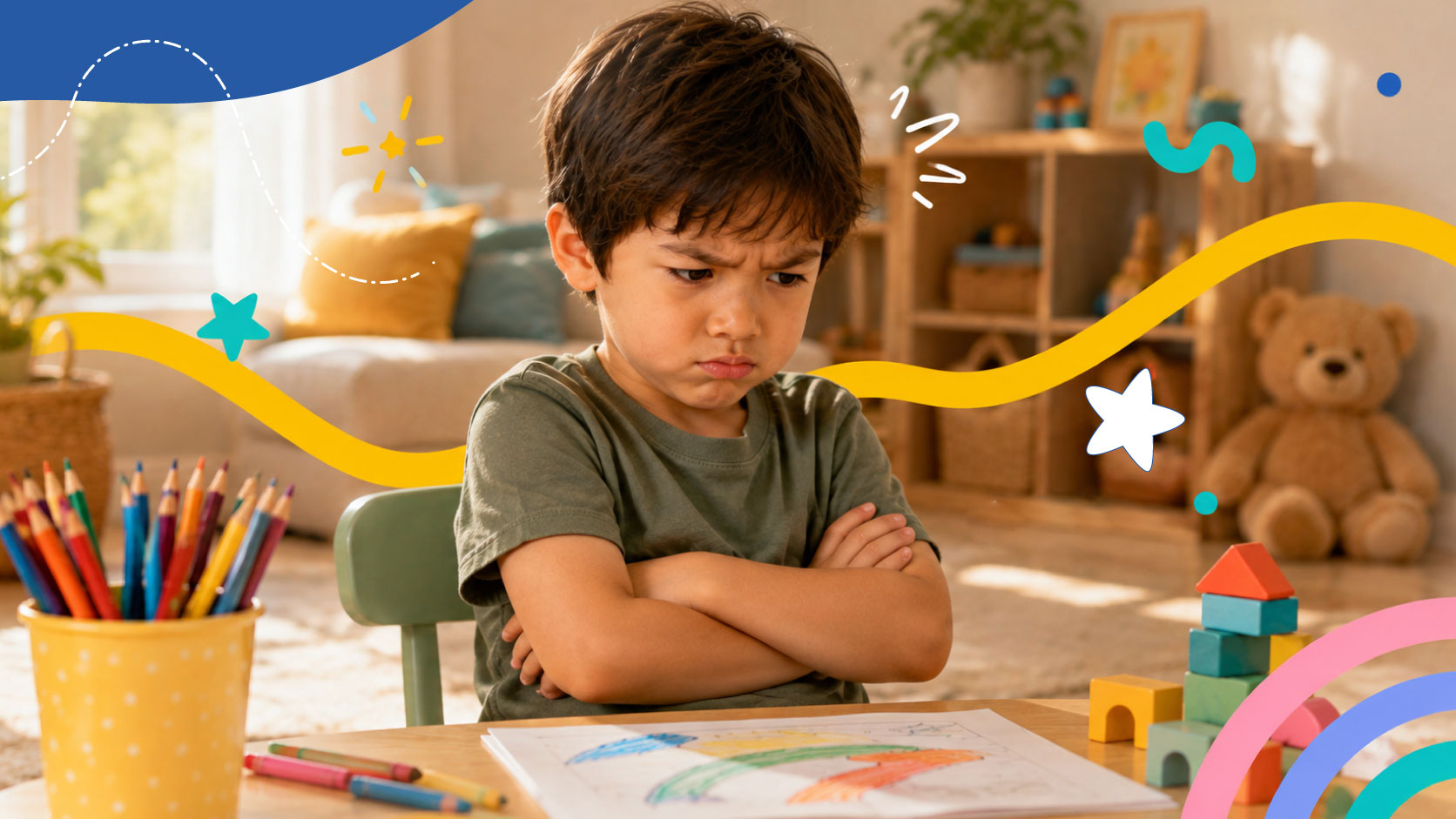
The hard part is not the decision. It is the ten minutes that follow it: the stretch where a child who was perfectly content is suddenly furious, and the only thing that would fix it is the thing you just took away. That stretch is predictable, it is short, and most of what makes it worse is done by the adult.
Give the warning at a natural edge
Screen time does not end well when it ends mid-thing.
A video has an end. A level has an end. A game with no natural stopping point has none, which is why those are the hardest to leave. Ending at an arbitrary moment feels, from inside, like being interrupted, because it is.
So: when this one finishes, not in five minutes. If the activity has no edge, ask them to find one. Get to the next save point and then we’re done.
The five-minute warning is standard advice and it is only half right. Five minutes is useless if minute five lands in the middle of something. The edge matters more than the countdown.
The handover
This is the whole technique, and it is one sentence long: have somewhere for the device to go, and go there immediately.
Not off and on the table. Not face down on the sofa. In a drawer, in a bag, on a shelf in another room. Do it as part of the same movement as the ending, without commentary, and then leave the room yourself.
An untouched, switched-off tablet sitting in view keeps the whole afternoon anchored to it. Every other activity in the house is being unconsciously measured against a device that is right there and theoretically available, a comparison that makes ordinary things feel duller than they are. More on why that happens in how long a five-year-old can actually concentrate.
Out of sight is doing real work here. It is not a symbolic gesture.
Do not negotiate during the ten minutes
Whatever gets said in the first ten minutes is not a position. It is a mood.
Three things make it longer:
- Explaining. A child in the middle of this cannot process a rationale about screen time, and attempting one invites a rebuttal, which invites another explanation. Nobody wins and the ten minutes becomes twenty.
- Offering a replacement. You could do a puzzle instead arrives as an insult at minute two. Every refused offer weakens the next one. Suggest nothing until the storm has passed.
- Staying to supervise it. An audience extends a performance. Go and do something else, within earshot, unhurried and visibly unbothered.
What helps is being nearby, calm, and boring.
What to do at minute eleven
Nothing, ideally. If the drifting lasts a while, that is fine, because boredom is not a problem to solve immediately.
If you want to put something in the room, put it there without offering it. A page on the table, pencils beside it, no announcement. The distinction matters: an offer made at minute eleven still belongs to the argument. An object that is simply present does not.
Make it a shape, not a decision
The single biggest reduction in daily conflict comes from screen time having a predictable shape rather than being negotiated each time.
If it happens at the same point in the day, ends at the same kind of edge, and the device goes to the same place afterward, there is nothing left to argue about. It is not a ruling you are handing down; it is just how the afternoon goes.
Anything that gets decided fresh every day gets contested every day.
The uncomfortable part
The ten minutes are unpleasant for you, and that is the actual reason most households hand the tablet back.
It is worth naming, because the fix is not more resolve. It is arranging things so the ten minutes cost you less: end at a natural edge, put the device away in one movement, leave the room, and know that it passes. It gets shorter every time you do not reverse it.
Common questions
How do I end screen time without a meltdown?
End at a natural edge in the activity rather than at an arbitrary time, put the device out of sight immediately, and avoid explaining or offering alternatives during the first ten minutes.
Why does my child get so upset when screen time ends?
Partly the interruption, especially if it lands mid-activity, and partly the comparison, because everything else available now feels duller by contrast. Both fade within about ten minutes if nothing reignites them.
Should I let my child have the tablet back to calm them down?
Handing it back ends the ten minutes and lengthens every future one, because it establishes that enough protest reverses the decision. Waiting it out once makes the next time shorter.
Activity books made to be finished
Colouring pages, puzzles, fun facts, activities and creative challenges for kids!
Browse the books→Keep reading


Come along for the day-to-day.
Something to have on the table for minute eleven. Free to print, or between covers.
Our activity books put all of this in one place. See the books →