
A realistic screen-free afternoon
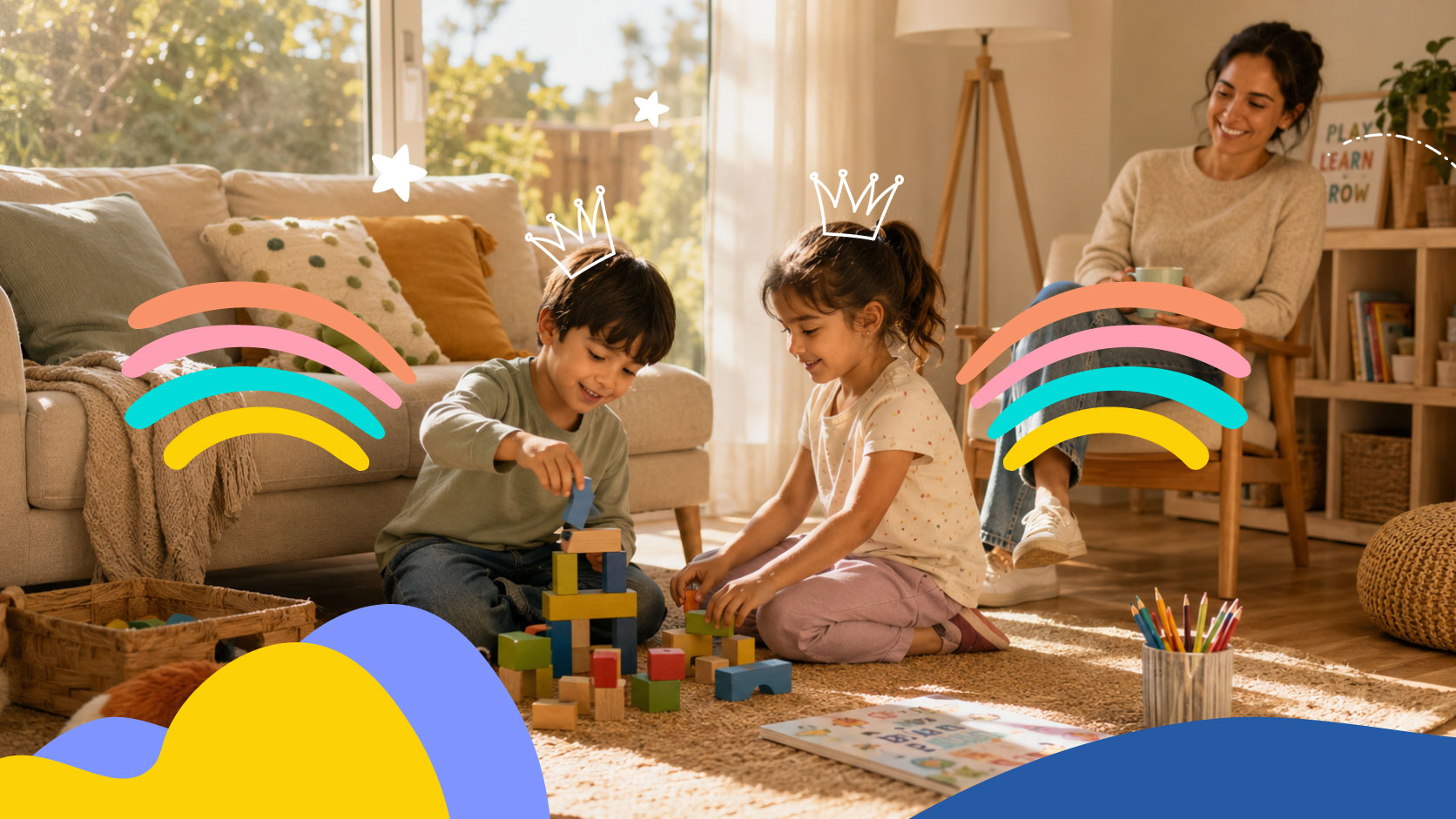
A screen-free afternoon is roughly forty minutes of resistance followed by two hours of ordinary life. The part that makes people give up is the middle: the stretch where your child has run out of ideas, you have run out of suggestions, and the obvious solution is sitting right there on the counter. Getting through it is mostly a matter of expecting it.
Most articles on this subject skip that part. They go straight from “turn off the tablet” to a photograph of two children building something out of cardboard. I want to write down what actually happens in between, because knowing it is coming is most of the battle.
The first twenty minutes are the worst
There is a particular quality to the complaint that follows a screen being turned off. It is not really about the screen. It is closer to grief, disproportionate and quite loud, and it passes.
Two things help. The first is not negotiating during it, because every counteroffer you make (“you could do a puzzle?”) gets rejected, and each rejection makes the next suggestion weaker. The second is not being in the room. Not as a punishment. Just go and do something else in the kitchen, visibly and unhurriedly, and let the storm exhaust itself without an audience.
It takes about twenty minutes. Sometimes ten. The first few times you do this it will feel like it is not working. It is working.
Then comes the boring bit, which is the point
After the protest, there is a gap. Your child is not upset anymore but they are not doing anything either. They will drift around, announce that there is nothing to do, lie on the sofa upside down.
This is the part to protect, not fix.
The temptation to fill it is enormous, and filling it is what stops the afternoon from working. Boredom is where the next thing comes from. If you supply an activity every time the gap opens, your child learns that gaps are your problem to solve, and the whole exercise turns into you running an activity program.
What I do instead is nothing, visibly. I put something on the table, a page, a puzzle book, a stack of paper, without saying anything about it, and I get on with my own thing. Sometimes it gets picked up in five minutes. Sometimes it sits there all afternoon and they build a fort instead, which is a better outcome.
If the gap genuinely will not close, what to do when your kid says “I’m bored” has the small number of things that reliably help.
Put the screen somewhere else
This is the one piece of practical advice I would keep if I had to throw out everything else.
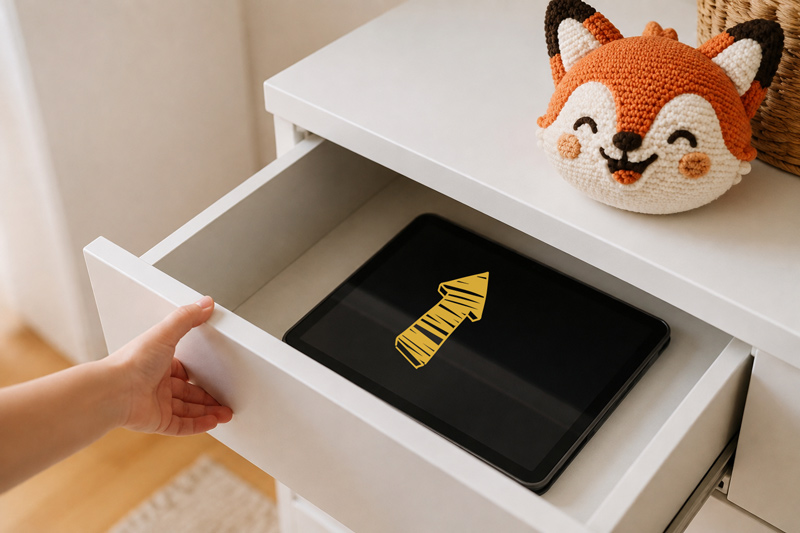
A tablet switched off on the kitchen counter is not neutral. Every other activity in the house is now being compared against it, unconsciously, all afternoon. There is research suggesting that people surrounded by interesting things they cannot use report more boredom than people in an empty room. The comparison itself is what does the damage. I wrote about it in how long a five-year-old can actually concentrate.
So the screen goes in a drawer, in a bag, in another room. Not off. Away. It sounds like a trivial distinction and it is not.
What the afternoon is actually made of
Once you are through the first hour, an afternoon fills itself more easily than you would expect. For us it is usually some combination of:
- Something at the table. A page, a puzzle, cutting things out. Twenty minutes, rarely more.
- Something physical. Outside if the weather allows, the stairs if it does not.
- A stretch of parallel activity, where they are doing their thing near me while I do mine. This is the most underrated hour in the day.
- One thing that makes a mess. Baking, painting, water. Budget for it in advance and it stops being an argument.
- A book, at the end, when everyone is tired and nobody wants to start anything new.
Nothing on that list is impressive. That is deliberate. An afternoon that requires preparation is an afternoon you will do once.
What I have stopped doing
Announcing it. “We’re having a screen-free afternoon” invites a negotiation before anything has started. I just do not turn it on.
Making it a reward or a punishment. Screens as currency raises their value every time you trade with them.
Doing it every day. We manage two or three afternoons a week. A rule you break constantly is worse than a habit you keep loosely.
Feeling bad about the ones that fail. Some afternoons everyone is tired and it does not happen. That is a Tuesday, not a parenting failure.
The part nobody mentions
The afternoon is harder for you than for them.
Two hours of a child who needs occasional attention is more demanding than two hours of a child on a tablet, and the honest reason most screen-free afternoons collapse is that the adult ran out of capacity, not the child. That is worth naming, because it means the fix is often about your afternoon rather than theirs: do the thing that needs doing while they are near you, not after they are settled, and accept that you will get less done.
It gets easier. Not because they change, particularly, but because the first hour stops being a surprise.
Common questions
How do I start a screen-free afternoon without a meltdown?
Do not turn a screen off. Have it already be away before the afternoon starts. Most of the protest comes from the moment of removal rather than from the absence itself.
How long does the resistance last?
Usually somewhere between ten and forty minutes, and it shortens the more often you do it. Not negotiating during it, and not staying in the room to watch it, both make it pass faster.
Should screens be banned completely?
Nothing here suggests that. Two or three screen-free afternoons a week, kept loosely, works better in practice than a strict rule that gets broken and renegotiated.
Activity books made to be finished
Colouring pages, puzzles, fun facts, activities and creative challenges for kids!
Browse the books→Keep reading



Come along for the day-to-day.
A folder of printed pages covers most afternoons. Our books cover the longer ones.
Our activity books put all of this in one place. See the books →